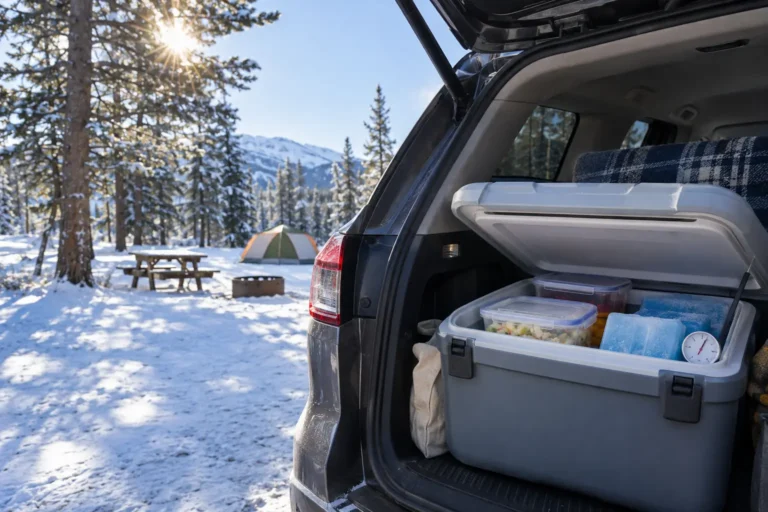
Can a Cold Car Replace a Cooler? Winter Food Safety for Car Campers
Winter air does not turn a parked car into a refrigerator. Use a thermometer and cold source to keep perishable food at 40°F or colder during a winter trip.
Winter air does not turn a parked car into a refrigerator. Use a thermometer and cold source to keep perishable food at 40°F or colder during a winter trip.

Dry ice can release carbon dioxide inside a parked car. Use this simple rule to choose a safer cooler setup before sleeping in your vehicle.
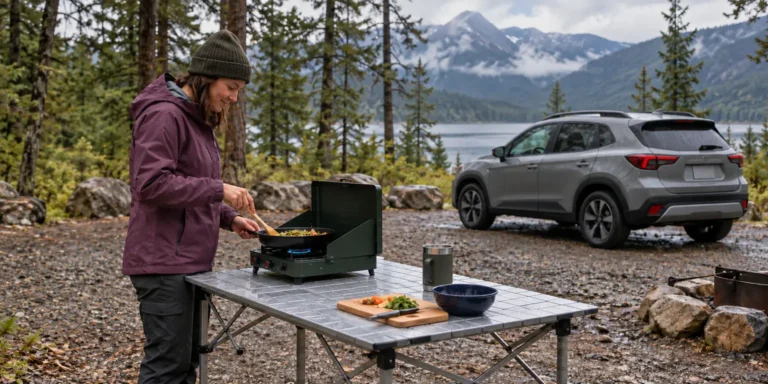
Keep fuel-burning camp stoves outside the car. Build a stable outdoor cooking spot and pack a no-cook fallback for wind, rain or restrictions.
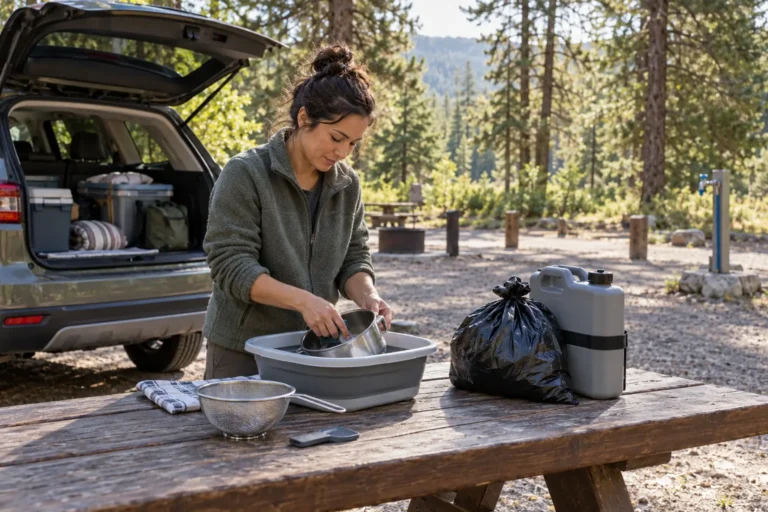
No camp sink? Capture the wash water, strain out food scraps, and follow the campground’s disposal route. This compact workflow keeps reusable dishes practical on a two-night car-camping trip.
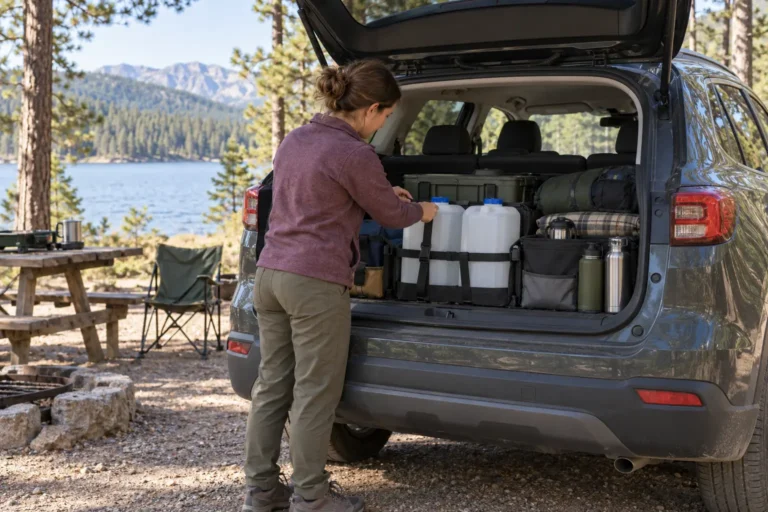
A practical way to plan drinking, cooking, hygiene and contingency water for a two-night car-camping trip without relying on one universal gallon figure.
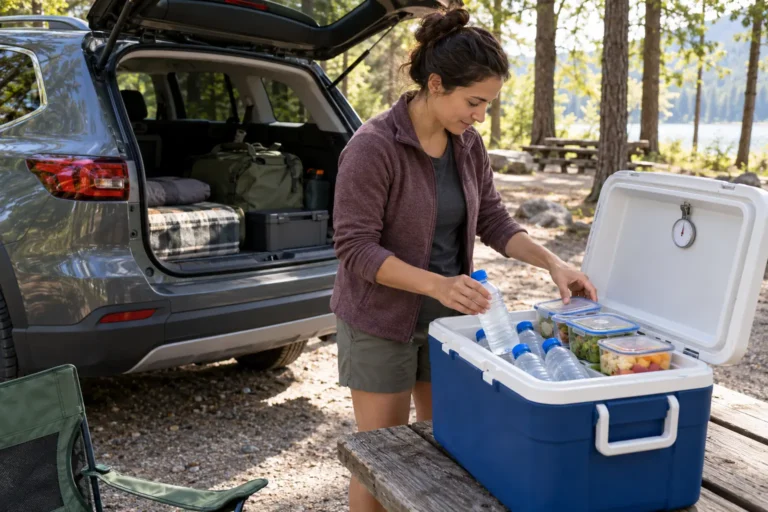
A thermometer-led cooler-packing plan for a two-night car-camping trip, including cold sources, pack order, raw-food separation, temperature checks, and discard rules.
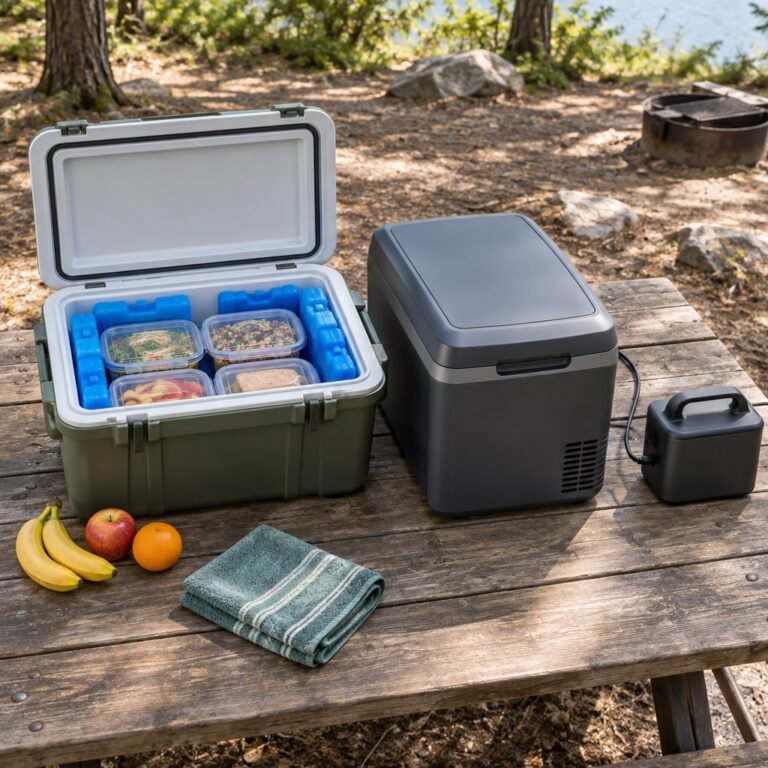
Choosing a cooler or compressor 12V fridge for two nights? Match the setup to your meals, ice access, overnight power and packed space, with a practical safety checklist.
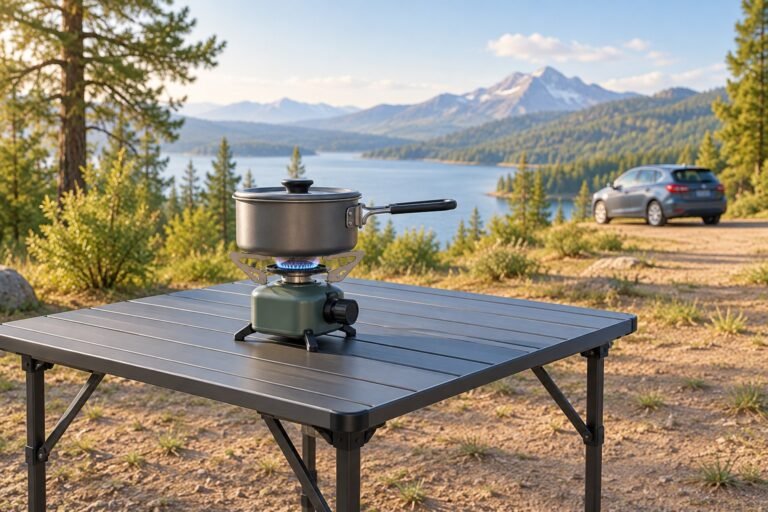
Four compact camp stoves under $100, compared by packed size, fuel, cookware and the meals they suit—plus the costs the sticker price leaves out.
Help us understand what is useful. With your permission, Google Analytics measures visits, pages viewed and interactions using cookies. Advertising features are disabled. You can browse without analytics and change your choice anytime. Privacy policy