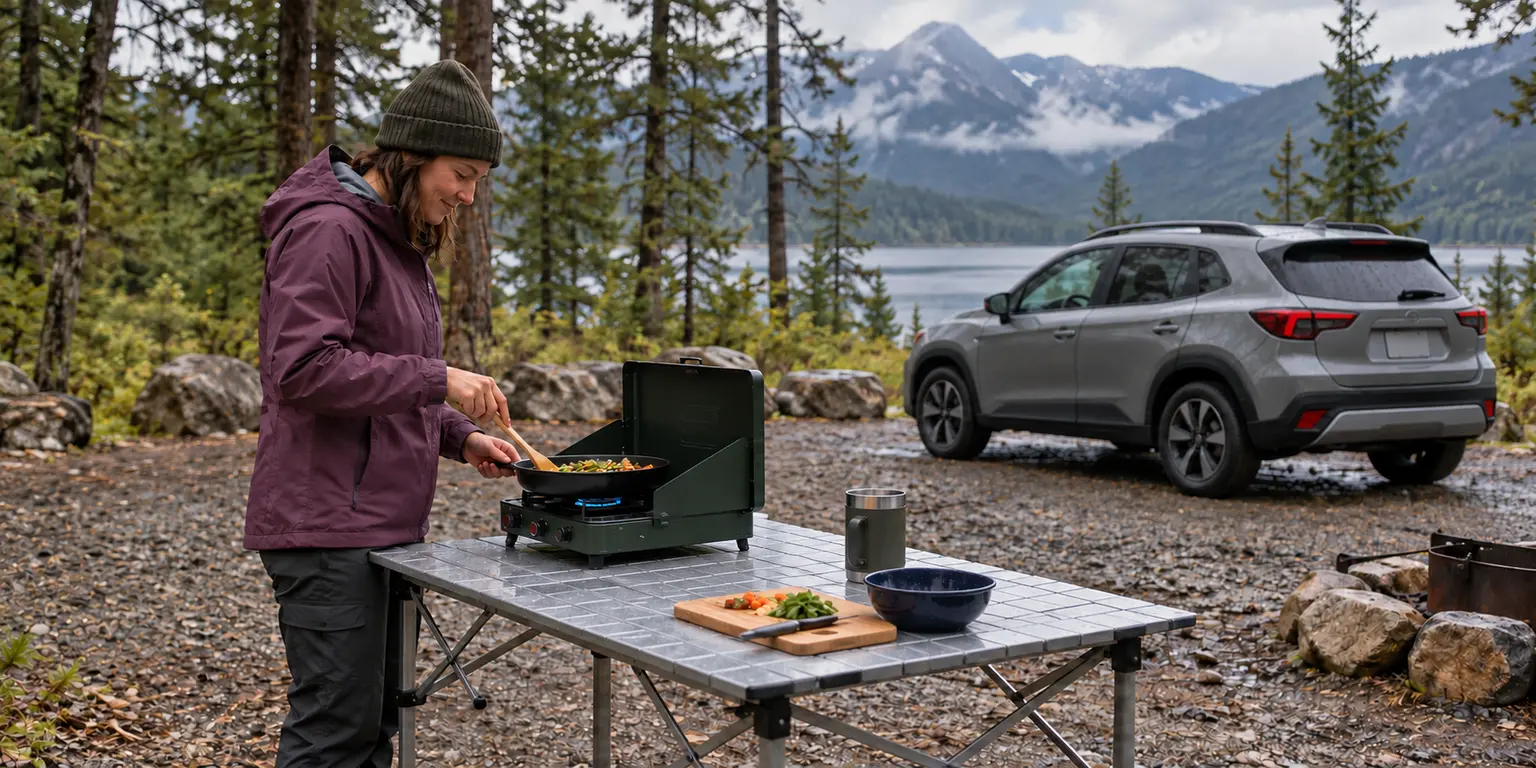
No: do not use a propane, butane, gasoline, kerosene or other fuel-burning camp stove inside your car. A cracked window or partly open hatch does not turn the cabin into the outdoor location required by an outdoor-only stove label. The risks are not limited to carbon monoxide: an unstable flame, hot cookware and nearby bedding or gear can also turn a cramped cabin into a fire scene.
The useful plan is not “ventilate more.” It is “cook outside or do not light the stove.” Decide what you will eat when wind, rain, fire restrictions or the lack of a permitted cooking area makes an outdoor flame a bad choice.
Why an open window is not the safety plan
Carbon monoxide (CO) has no color or odor. The U.S. Centers for Disease Control and Prevention says fuel-burning devices can produce it and explicitly warns never to use a portable gas camp stove indoors. Common symptoms include headache, dizziness, weakness, upset stomach, vomiting, chest pain and confusion. A person who is sleeping may not notice the danger in time.
The U.S. Consumer Product Safety Commission also warns about deaths involving portable camping heaters, lanterns and stoves used inside tents, campers and vehicles. CO illness can resemble a cold or flu, which makes “I will stop if I feel unwell” an unreliable operating plan.
Do not rely on claims that CO will settle near the floor. Do not treat an open hatch, fan, short cooking time or CO alarm as permission to ignore an outdoor-only label. An alarm can add warning, but it cannot convert an outdoor stove into an indoor appliance.
Build the outside cooking spot before you light anything
Use the stove only where the exact manual permits it. As one manufacturer example, Coleman’s stove FAQ says its liquid-fuel and propane stoves are designed for outdoor use in well-ventilated areas clear of combustible material. A model-specific Campingaz instruction manual likewise says that appliance is for outdoor use only and must not be used in a car, camper, tent or home. Your stove may have different setup details, so read its own manual and fuel-cylinder label rather than borrowing instructions from another model.
Choose a stable outdoor surface where the stove cannot tip. Keep dry grass, bedding, bags and other easy-to-ignite material away. Do not improvise on the car’s hood, roof, tailgate or interior surface unless the exact manufacturer expressly authorizes that setup. A separate stable table or permitted cooking surface is the safer general plan.
In the United States, the National Park Service tells visitors to check current fire restrictions and closures, clear easily ignited vegetation around a portable stove and prevent it from tipping. Those are U.S. examples, not worldwide rules. Wherever you travel, recheck the current land manager’s restrictions at departure and arrival.
| Situation | Fuel stove action | Backup plan |
|---|---|---|
| Outdoor site is permitted and stable | Follow the exact manual, clear combustibles and stay with the stove. | Keep a no-cook meal available if conditions change. |
| Wind, rain or restrictions make flame unsafe | Do not move the stove into the car. | Eat the no-cook meal or wait. |
| Inside a car, tent or enclosed sleeping space | Keep every fuel-burning stove off. | Use food that needs no heating. |
| Damaged, leaking or uncertain equipment | Do not light it; keep it away from ignition. | Follow the maker and local disposal guidance. |
In words: use a fuel stove only at a permitted, stable outdoor spot and exactly as its manual directs. If weather or restrictions make that unsafe, do not retreat into the car—switch to food that needs no flame or wait. Keep a damaged or suspect stove off and follow the manufacturer’s handling instructions.
Make the bad-weather meal part of the packing list
A no-cook backup is safety equipment because it removes the pressure to improvise. Pack something you will actually eat: sandwiches assembled before departure, shelf-stable food, or chilled items held at a safe temperature. The separate guide to packing a cooler for a two-night trip covers the cold-food side without pretending a cooler makes every food safe indefinitely.
If you still need an outdoor stove, compare size, fuel and controls in the compact camping stove guide only after accepting the outdoor-use requirement. A smaller stove is not an indoor stove.
Rain alone does not authorize moving a flame beneath the hatch or into the sleeping cabin. Wait for a permitted outdoor setup, use an approved shelter only if the stove maker and site rules allow that exact arrangement, or eat the backup meal. Do not invent a universal “safe distance” from the vehicle; wind, surfaces, stove design and local restrictions vary.
Treat the stove and fuel cylinder as separate checks
Read both labels. The National Park Service’s propane canister guidance notes that propane is extremely flammable, must stay away from fire and ignition sources, and that DOT-39 single-use cylinders are not refillable. Transport, connection, storage and disposal requirements vary by cylinder, stove, country and local facility, so follow the exact manufacturer instructions and local rules.
If you smell fuel, see damage, suspect a leak or cannot confirm that the parts are compatible, do not light the stove. Keep people and ignition sources away and use the manufacturer’s emergency or disposal guidance. Do not test for leaks with a flame.
Finish outside, then bring only cooled gear back
Stay with a lit stove. When cooking is finished, turn it off according to the manual and let the stove and cookware cool in the safe outdoor area before packing them near bedding or plastic bins. The guide to washing dishes without a camp sink covers low-water cleanup after the flame is out; it is not a reason to handle hot equipment inside the car.
For recreational car camping, the decision can stay pleasantly simple: fuel flame outside under permitted conditions, no flame inside the sleeping cabin, and a meal that still works when outdoor cooking does not.
Sources
- CDC: Carbon Monoxide Poisoning Basics (accessed October 29, 2026)
- U.S. CPSC: Portable Heaters & Camping Equipment (accessed October 29, 2026)
- Coleman: Stove FAQs (accessed October 29, 2026)
- Campingaz: Model-specific stove instructions (accessed October 29, 2026)
- National Park Service: Wildland fire safety for visitors (accessed October 29, 2026)
- National Park Service: Propane Canister Safety for Campers (accessed October 29, 2026)