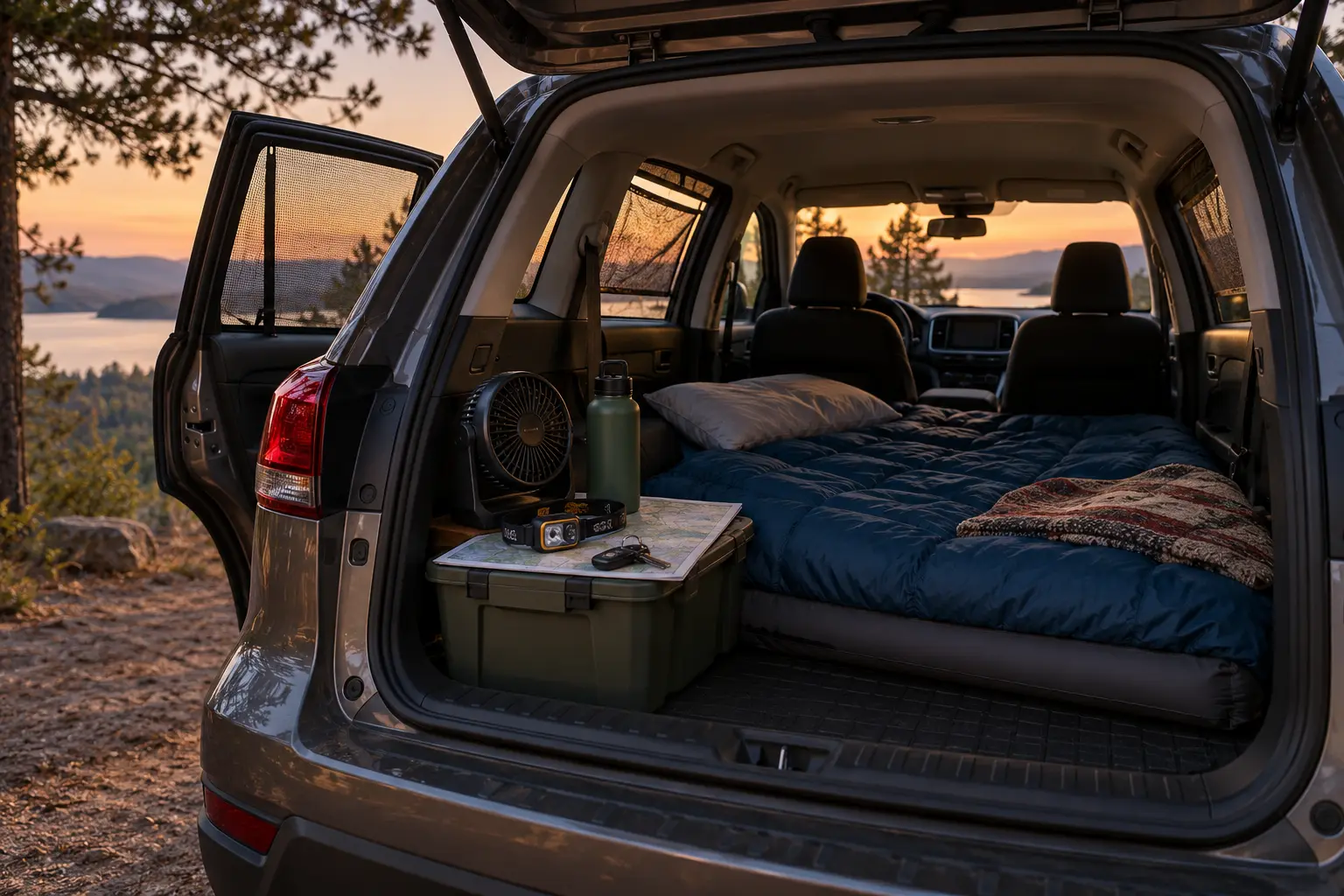
A fan can make a suitable car-camping night feel better. It cannot turn dangerous heat into a safe sleeping environment. Start with the forecast, overnight low, humidity, heat alerts, your health and a genuinely cooler fallback. Only then decide whether screens, shade and a battery-powered fan belong in the plan.
The key distinction is simple: airflow gear supports comfort after the night passes a safety check. It is not the safety check.
Check the whole night, not the temperature at bedtime
Look at the current forecast for the exact location, including the overnight low, humidity, sunrise time and any heat alert. The National Weather Service heat guidance explains that heat risk depends on more than one afternoon number. Duration, unusual heat for the season, acclimatization and warm nights that limit recovery all matter.
An Extreme Heat Warning is a change-the-plan signal, not a cue to buy a stronger fan. NWS advises spending as much time as possible in air conditioning during an extreme heat warning, including overnight. A watch or advisory still calls for preparation and a cooler alternative.
There is no universal outdoor temperature that makes sleeping in every parked vehicle safe. Cabin shape, sun exposure, humidity, wind, elevation, insulation, local conditions, clothing, bedding, health and acclimatization all change the result. If you cannot establish a reasonable plan without pretending one number settles all of that, choose cooled lodging, a different campsite or another night.
Is tonight suitable for sleeping in the car?
-
Forecast
Dangerous-heat alert or vulnerable occupant? Use a genuinely cooled alternative. Do not begin the car-sleeping night.
-
Fallback
No reliable cooler place you can reach promptly? Change the plan before unpacking. A fan is not a fallback.
-
Airflow setup
Conditions remain suitable and outside air is cooler? Pre-cool before bed, use legal screened cross-flow and power the fan independently.
-
Exit trigger
Symptoms, stalled airflow or a warming cabin? Leave immediately and use the cooler fallback.
What shade and cracked windows cannot promise
Shade can reduce solar loading, and fitted screens can make it practical to open opposite windows without filling the cabin with insects. Neither guarantees a safe interior. In its unattended-child heatstroke guidance, NHTSA warns that parking in shade or cracking a window does little to change vehicle interior temperature.
That evidence is about children left in vehicles, not an adult car-sleeping temperature study. It still establishes an important boundary: a partly open window is not a heat-safety guarantee. Never leave a child or pet in a closed vehicle, and do not treat an adult’s presence as proof that any temperature is manageable.
For legal parking and campground rules, check the destination before building the evening around the car. Our guide to checking whether a tent campsite allows sleeping in your car covers that separate question.
What a fan actually does
A fan moves air across your skin. It does not manufacture colder air. That can improve comfort when conditions are already suitable, especially when cooler outside air can enter one screened opening and warmer cabin air can leave another.
CDC’s extreme-heat guidance advises using an electric fan indoors only when indoor temperature is below 90°F, because hotter air can increase body temperature. That is indoor public-health guidance—not a safe car-camping threshold. A vehicle is a different, smaller enclosure with changing sun, ventilation and heat load, so do not turn 90°F into a permission line.
Use a fully charged, self-contained fan or an appropriately managed auxiliary power supply. Do not make the starter battery an overnight experiment, and do not publish a runtime promise that ignores fan speed, battery age and conversion losses. Our power bank versus portable power station guide explains how to match modest loads to the right power class without confusing capacity with guaranteed runtime.
Build a passive setup before dark
Park legally for morning shade rather than assuming evening shade will remain useful after sunrise. If the site and weather allow it, fit insect screens securely and open windows on opposite sides for cross-flow. Keep the primary exit unobstructed, use light bedding, and put water, shoes, keys and a headlamp where you can reach them without reorganizing the car.
Opaque window covers may provide privacy, but do not block the openings needed for airflow. Choose and place them deliberately; the trade-offs in our window covers, curtains and window socks comparison matter more on a warm night. Likewise, advice that helps reduce car-window condensation can explain cross-ventilation, but avoiding condensation is not evidence that the cabin is cool enough.
Pre-cool yourself and the setup before bed rather than starting hot. Drink regularly, but avoid claiming that water alone prevents heat illness. The practical quantities and refill margin in our two-night car-camping water guide help with trip planning; they do not replace a cooler environment.
Keep combustion exhaust out of the plan
Do not normalize running a combustion engine all night for climate control. Carbon monoxide is colorless and odorless, and CDC notes that vehicle exhaust can produce it and that even a small exhaust-system leak can allow it to build inside a car. A sleeping person may not recognize the danger in time.
Never run an engine in a garage, carport or other enclosed or partly enclosed space. Do not sleep downwind of another vehicle, generator or combustion appliance. CDC also warns that driving with an SUV tailgate open can draw exhaust into the vehicle unless other windows or vents are open; an open hatch is not a generic ventilation solution around exhaust.
Some electrified vehicles advertise model-specific climate or camping functions, but their operation, battery reserve, emissions behavior and automatic shutoffs vary. Read the exact owner’s manual instead of assuming another model’s routine applies. The same rule is central to our guide on running a car for heat while sleeping: climate comfort never overrides exhaust and manufacturer-specific safety boundaries.
Set exit triggers before you feel unwell
Do not wait for an emergency to decide what “too hot” means operationally. Before bed, name the cooler fallback, keep the route clear and decide that a warming cabin, failed fan, loss of airflow or concerning symptoms ends the car-sleeping attempt.
CDC lists heavy sweating, headache, dizziness, weakness, nausea and other changes among warning signs of heat illness. Confusion, loss of consciousness, seizures or very high body temperature can signal heat stroke, which is an emergency. Move to a cooler place, seek emergency help for severe symptoms, and follow current public-health instructions rather than improvising treatment.
The National Park Service recommends monitoring health, checking current alerts and forecasts, maintaining equipment and knowing when to use the backup plan or pack up. That is the right mindset here: leaving early is the plan working, not the trip failing.
Reset before the sun loads the cabin
Morning sun can change the cabin quickly. Wake before direct sun reaches the vehicle, assess the air and your condition, drink, and move the car or leave if the site is warming. Recharge the fan and auxiliary battery away from heat, dry the screens, and note what the overnight forecast got right or wrong for future planning.
The short answer is not “buy a fan.” It is: check the entire night, require a real cooler fallback, use passive cross-flow and independent power only in suitable conditions, and leave as soon as the cabin or your body says the margin is gone.
Sources
- National Weather Service: Heat Forecast Tools — HeatRisk context, duration, acclimatization and overnight recovery.
- National Weather Service: Heat Watches, Warnings and Advisories — alert meanings and cooled-space guidance.
- NHTSA: Child Heatstroke Prevention — unattended-child context and limits of shade or cracked windows.
- CDC: Extreme Heat and Your Health — fan caveat and heat-illness warning signs.
- CDC/NIOSH: Heat-Related Illnesses — symptoms and emergency severity.
- CDC: Carbon Monoxide Poisoning Basics — vehicle exhaust, cabin entry and sleeping risk.
- National Park Service: Camping Safely During Your Stay — forecasts, monitoring, backup plans and vulnerable occupants.