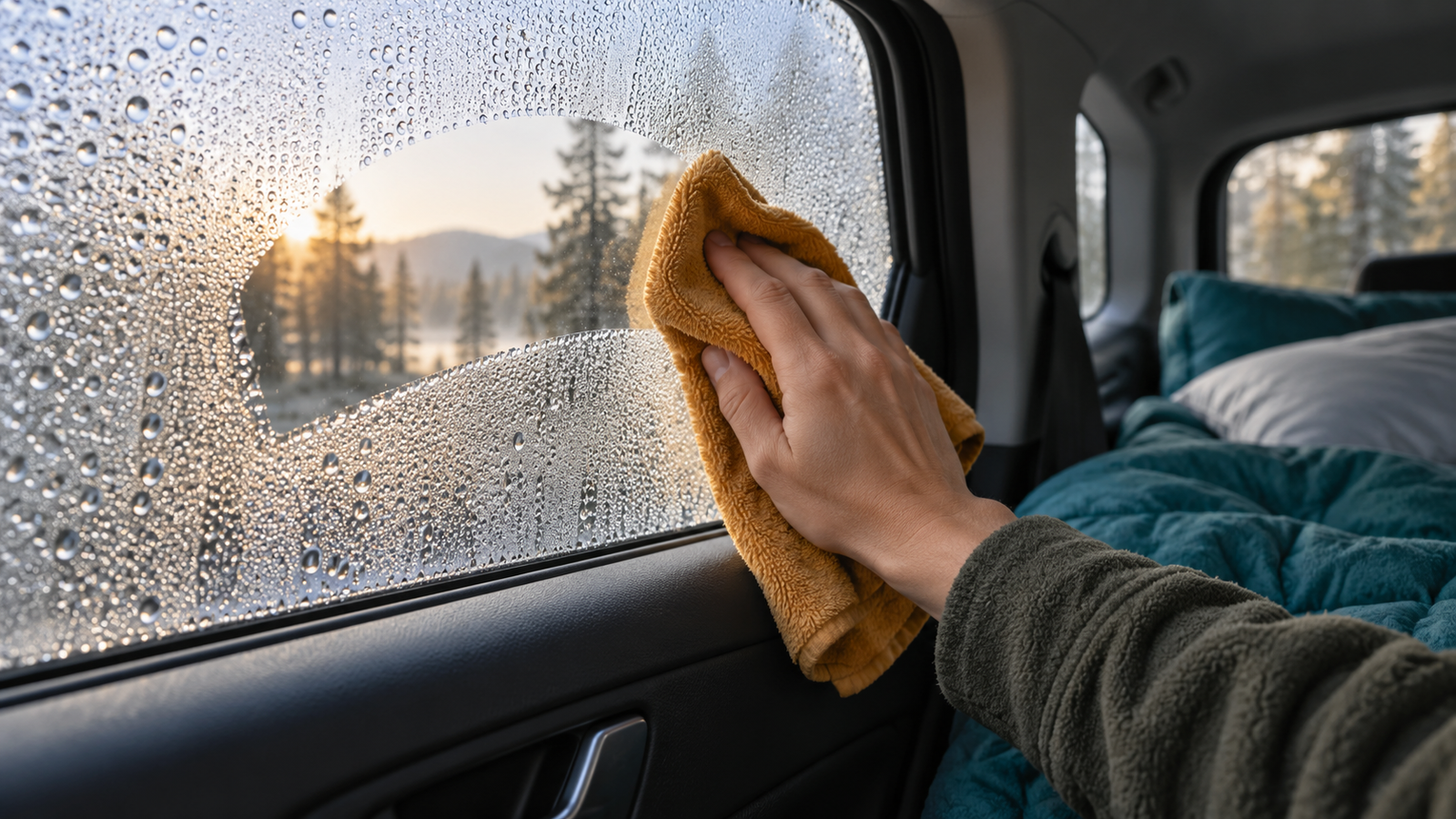
To manage condensation when sleeping in your car, start with less wet gear inside, an airflow arrangement that works in tonight’s weather, and a plan to wipe windows and dry bedding in the morning.
That can make a damp night more manageable. It won’t promise spotless glass. Your windows haven’t read the camping checklist.
The useful goal is drier bedding and manageable moisture, rather than a perfectly condensation-free car.
This guide combines published weather and car-camping guidance with our practical recommendations. We haven’t tested ventilation arrangements or moisture-control products. Sources checked October 11, 2026.
Why the windows get wet
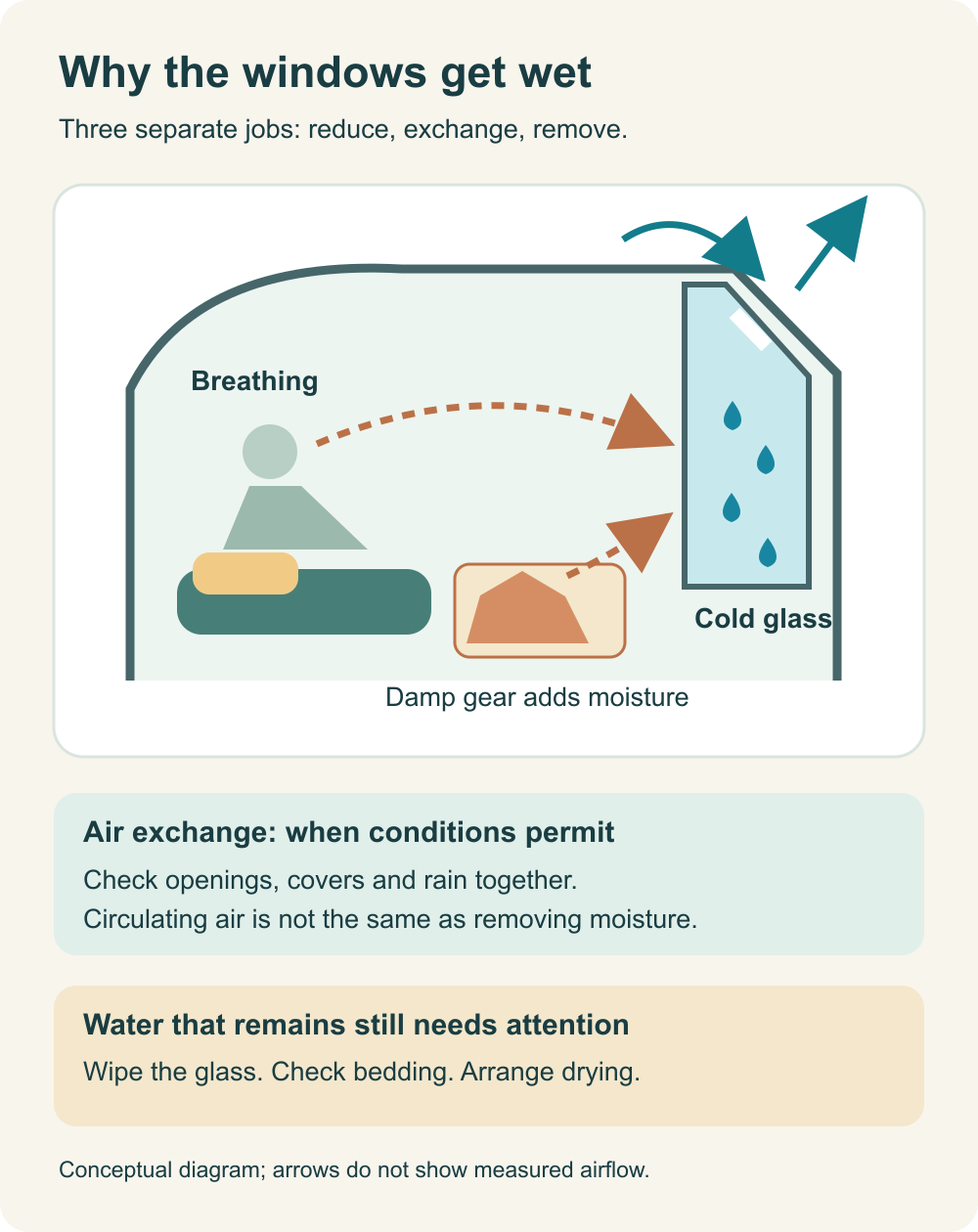
Condensation forms when a surface cools to the dew point of the air beside it: water vapour turns into droplets. The Met Office explains this process in its guide to dew.
Apply that principle to your car: cold glass can collect moisture from the cabin air. Breathing and damp clothing add to that moisture, as REI’s car-sleeping guidance notes[1].
You can’t switch off breathing, but you can avoid turning the sleeping area into a drying rack for everything you wore in the rain.
Keep three jobs separate:
- Reduce moisture going in: deal with wet clothes and equipment.
- Allow air exchange when conditions permit: check openings, covers and weather together.
- Remove what remains: wipe wet surfaces and dry gear afterward.
A cloth does the third job. A window opening may help with the second. Neither makes the first irrelevant.
Before bed, deal with wet gear
Look through the car before unfolding the bed. Is there a soaked jacket on the seat, a damp towel beside the pillow or wet footwear tucked into the bedding?
Dry wet clothing before turning in where feasible; that is also REI’s recommendation[1]. Our practical addition is to give wet items a separate place, away from the dry sleep kit.
For example, after a rainy walk, change out of the wet jacket before settling in. If you can’t dry it yet, contain it separately for transport and unpack it for drying when conditions allow. Separation protects the bedding from contact; it doesn’t dry the jacket.
Arrange the pillow and blanket so they aren’t pressed against wet glass. If your bed leaves no room to do that, revisit the layout with our car sleeping measurement checklist. You don’t need a new mattress to discover that a bag or pillow could go somewhere else.
Keep your wiping cloth accessible, too. Under the fully deployed bed is an excellent place for something you won’t need until next week.
Ventilation helps, but the whole setup matters
REI recommends ventilation[1] to manage overnight moisture. Think about an opening as a way to exchange cabin air, rather than a guaranteed cure for condensation.
There is no opening size in this guide that works for every car, weather pattern and sleeping arrangement. Check the actual setup before bedtime:
- Can your chosen opening remain usable in the expected rain?
- Does a privacy cover block it?
- Do any screens or accessories fit and operate as intended?
- Is loose bedding or fabric in the way?
- Is the arrangement appropriate for this vehicle and location?
A privacy cover can block light without proving anything about security, insulation or airflow. An insect screen addresses insects; it isn’t a drying system. Check how each part works with the others. For coverage and door-fit checks, see our window covers, curtains and window socks guide.
A small fan has a different role again. Moving air around the cabin is not, by itself, evidence that moisture is leaving the car. If you choose a battery fan, treat it as an optional circulation aid—not proof of adequate ventilation or a dry morning. We have no comparative fan tests here.
What changes when it rains?
Rain makes the choice less convenient: you want air exchange, but not incoming water on your bed.
Before settling in, check the forecast and try the planned opening with the rest of the sleeping setup in place. A window that seemed workable earlier may need reassessing if rain starts or changes direction.
Rain guards or similar accessories may help shelter an opening in some arrangements. Their usefulness depends on the vehicle, installation and weather; a fitted accessory is not a promise that rain will stay out.
If water reaches the sleeping area, adjust or close that opening to stop the ingress and reassess the plan. Closing it addresses incoming rain; it does not solve cabin moisture. If you can’t keep the bedding suitably dry and the arrangement workable, use another overnight option.
For the broader preparation and backup plan, see our first-night car camping checklist. Here, the decision is narrower: can tonight’s arrangement handle both outside rain and inside moisture?
Which items actually address the problem?
These are practical roles, not product recommendations or tested performance rankings.
| Item or action | What it addresses | What it doesn’t establish |
|---|---|---|
| Dry wet gear; keep it separate | Moisture input and contact with bedding | That contained gear is drying |
| Suitable window opening | Air exchange when conditions permit | A moisture-free or universally safe setup |
| Insect screen | Insect access at the opening | Insulation or drying performance |
| Rain guard | Possible shelter for an opening | Rainproofing in every weather condition |
| Optional battery fan | Air circulation | Moisture removal by itself |
| Cloth or squeegee | Water already on the glass | Prevention of the next droplets |
Start with the routine and a cloth. Add an accessory only when you can name the problem it solves—such as an opening you can’t use because of insects—and check its compatibility.
Give the car and bedding a morning dry-out
Keep a cloth or squeegee ready for the windows, as REI suggests[1]. Collect the water rather than wiping it into the bedding, and keep the damp cloth separate afterward.
Then check the pillow, blanket or sleeping bag, mattress surface and covers. Lift and inspect accessible layers rather than assuming that dry-looking glass means everything else is dry.
Where conditions permit, air damp items before repacking, following their care instructions. If rain prevents drying at the site, plan a later opportunity to unpack them. Putting damp bedding into a bag for the drive is transport, not a completed drying job.
Before driving, restore clear visibility and remove stationary-use window covers. Note where moisture collected and what got wet. That gives you a specific adjustment for the next night, instead of a reason to buy every condensation accessory you can find.

Don’t use combustion heat as a drying shortcut
Sleep with the combustion engine off, as REI advises. CDC guidance explains that fuel combustion produces carbon monoxide and exhaust leaks can allow it to build up inside a car.
Don’t use fuel-burning heaters, stoves or lanterns inside this sleeping setup. In its power-outage guidance, CDC warns against camping stoves, charcoal grills and lanterns inside homes, tents or campers because combustion fumes can accumulate in enclosed spaces.
An open window is not permission to use combustion equipment. This guide does not evaluate EV climate modes, installed heating systems or vehicle-specific ventilation safety.
A short evening and morning checklist
Before bed
- Wet gear dealt with or separated from dry bedding.
- Pillow and bedding clear of wet surfaces.
- Openings, covers and accessories checked together for tonight’s weather.
- Wiping cloth reachable; another overnight plan available if needed.
In the morning
- Window water collected and damp items checked.
- Bedding aired, or a later drying opportunity planned.
- Covers removed and driving visibility restored.
Some condensation may remain. Focus on keeping the sleep kit usable, dealing with the water and giving damp gear a proper chance to dry.
Planning a colder night as well? Our guide to sleeping warm in a car without a heater covers insulation, dry bedding and a reachable warmer backup.