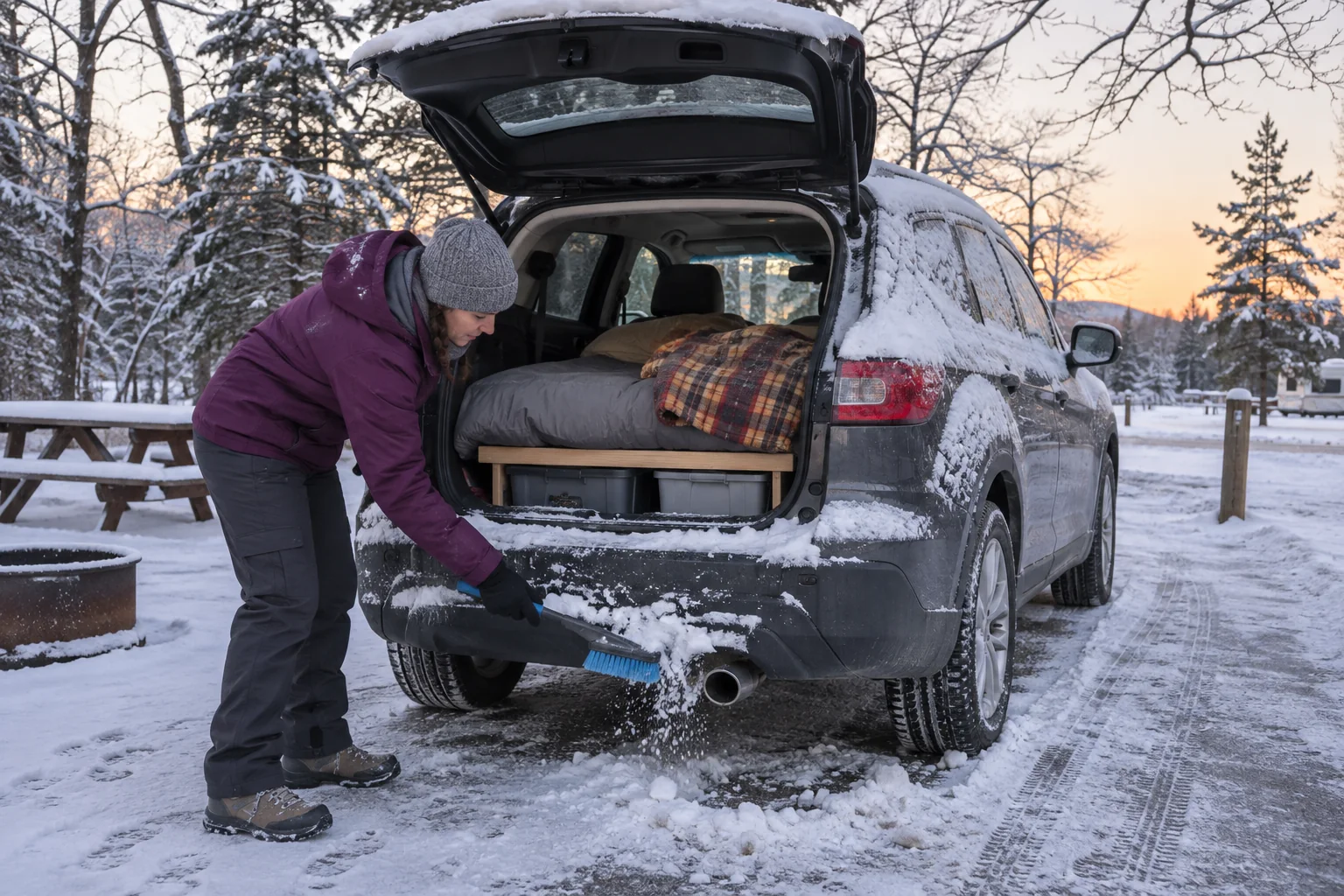
You wake to a quiet car and a fresh layer of snow. The tempting move is to start the engine from the sleeping bag and warm up while you pack. Do the outside check first.
After overnight snowfall, keep the engine off until you have checked the exhaust area, cleared the whole vehicle, made a safe path out and confirmed that the route is sensible. A clear windshield alone is not enough.
Start with the tailpipe, not the ignition
Put on suitable footwear and go outside before using the key, push-button start or remote start. Find the tailpipe and clear snow from the opening and the area around it. The US Centers for Disease Control and Prevention warns that a snow-blocked tailpipe can allow carbon monoxide to build rapidly inside a vehicle.
Do not crawl beneath a running vehicle or put yourself under an unstable car. If you cannot safely reach the exhaust area, or drifting snow immediately covers it again, the check has not passed. Get help or wait for safer conditions.
This is also why a planned car-camping night should not rely on idling for heat. Read the separate guide to running a car for heat while sleeping. A carbon monoxide alarm can add warning, but it does not make a blocked exhaust safe; see the guide to CO alarms for car camping.
Clear the whole car
Brush snow and remove ice from the roof, all windows, mirrors, lights and any driver-assistance sensors identified in your vehicle manual. The US National Weather Service advises clearing all snow from the vehicle so it cannot slide onto your windshield or fly onto other road users.
Restore full outward visibility instead of making a small peephole. Clear around doors you may need and keep an exit route open while the car is still your shelter. If moisture has frozen on the inside of the glass, use the separate interior-windshield frost routine before driving.
Use four gates before startup
| Gate | Verify | Pass | Stop |
|---|---|---|---|
| Exhaust | Tailpipe and nearby snow are visible | Opening and surrounding area are clear before startup | You cannot safely reach it or keep it clear |
| Vehicle | Roof, glass, mirrors, lights and manual-identified sensors | Full outward visibility; loose snow and ice removed | Snow or ice can still block vision, slide or fly off |
| Exit and traction | Door path, footing and the snow around the tires | You can leave without unsafe digging or wheelspin | The car is buried, footing is unstable or effort feels unsafe |
| Route | Current weather, road information and campground access | Conditions support departure | Closure, poor visibility or unsafe road conditions remain |
Text equivalent: start the engine only after all four links in the chain pass: exhaust clear, whole vehicle clear, exit workable and route suitable.
Check whether the car can actually leave
Before converting the shelter back into a vehicle, look at the snow around the tires, the route to the road and your footing. Keep the engine off while digging near the exhaust. Use a shovel, broom or snow brush rather than hands alone; NHTSA’s winter-driving guidance includes a shovel, broom and ice scraper in its recommended winter kit.
There is no universal snow depth that makes departure safe. Vehicle clearance, tires, slope, surface, drifting and local requirements all matter. Avoid repeated wheelspin and do not exhaust yourself trying to free a buried car. If the vehicle is stuck or your footing is unstable, call the campground host, roadside assistance or local emergency services as appropriate.
A cleared car does not guarantee a safe road
Check current weather, road closures and campground access before leaving. Winter roads may require slower travel and more following distance, but this article cannot set a universal speed, chain rule or traction threshold. Those depend on the road, vehicle and jurisdiction.
If snowfall continues while you work, repeat the exhaust and vehicle checks immediately before startup. Once the engine is running, stay alert to new accumulation and any exhaust smell or warning symptoms. If you suspect carbon monoxide exposure, move to fresh air and seek emergency help.
Guidance for someone genuinely stranded in a winter emergency is not a routine for recreational camping. Follow local emergency instructions rather than copying an engine-running interval into a normal overnight setup.
Pack the reset before the trip
Keep a snow brush, scraper, compact shovel, gloves, suitable footwear and a charged phone where you can reach them without unloading the whole bed. Check the forecast and access rules before settling in, and leave enough room to open a door safely after snowfall.
The morning sequence is simple: engine off, outside inspection, exhaust clear, whole car clear, exit check, route check, then start. Treat every step as a gate, not a suggestion you can trade for a warm cabin.