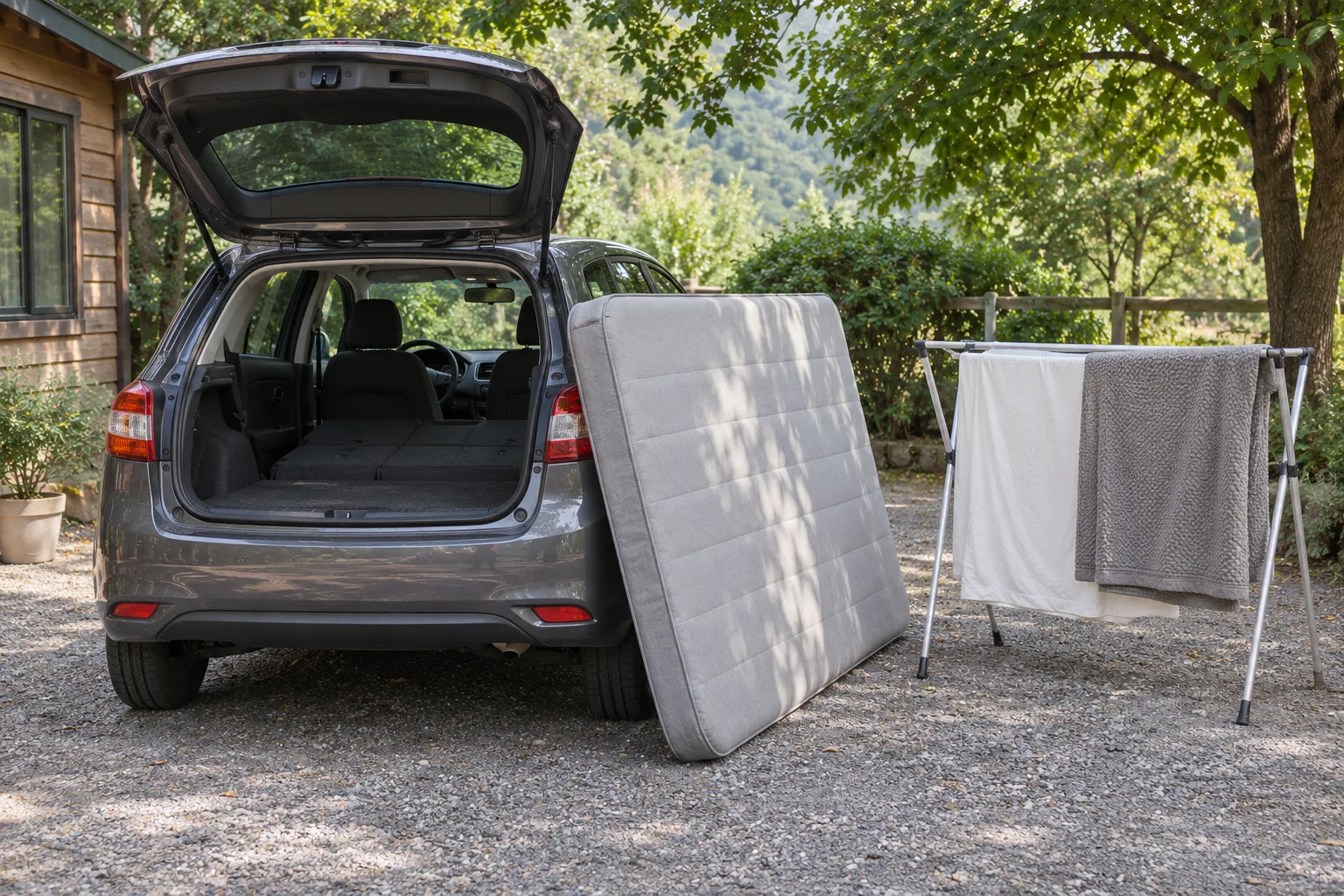
A mattress can feel dry on top while the underside is still damp. In a car, that hidden surface sits close to a cold cargo floor, liner or folded seat, so it deserves its own check before everything is rolled up and put away.
The practical routine is simple: unload the sleep system, separate every layer, inspect both sides, dry the mattress and vehicle surface independently, then follow the exact mattress maker’s instructions for long-term storage. Do not assume every pad should be rolled, inflated or stored with its valves in the same position.
Start the dry-out when the trip ends
Lift the mattress before packing the rest of the car. Check its underside, the sheet or cover, blankets, pillows and the cargo liner or seat surface beneath it. Moisture can be concentrated where two materials were pressed together even when the cabin looks dry.
If the night was damp, keep wet clothing and towels away from the bedding on the trip home. Once you arrive, take the sleep system out of the car instead of leaving it compressed under other gear. A parked vehicle is convenient transport, but it is not automatically the cool, dry storage place that mattress makers describe.
This routine starts after the overnight moisture-control steps in our car-camping condensation guide. It does not replace ventilation during the night; it deals with the moisture that remains afterward.
A five-step return-home routine
- Unload and separate. Remove the mattress, sheet, sleeping bag or blanket, pillows and any damp clothing. Do not leave a wet layer folded against a dry one.
- Inspect the hidden surfaces. Look and feel beneath the mattress and on the cargo floor, liner or seatback. Check seams and the area around valves without pulling or stressing them.
- Dry each part independently. Give air access to both sides of the mattress. Hang or spread bedding according to its care label, and let the vehicle surface dry before rebuilding the bed.
- Clean only as directed. If the mattress needs cleaning, use the instructions for its exact model. Valve position, soap choice, sunlight exposure and machine-washing rules are not universal.
- Store by construction and model. Wait until the sleep system is fully dry, then use the documented storage shape and valve setting rather than copying a routine for another type of pad.
The US Environmental Protection Agency’s general mold guidance makes moisture control the central task and says water-damaged building materials should be dried within 24–48 hours. That time range is not a camping-mattress warranty or a promise that waiting is harmless. For car-camping gear, the useful takeaway is to begin drying promptly rather than sealing damp layers together.
There is no universal roll-and-valve rule
Even mattresses from one brand can require different long-term storage. The examples below are a decision aid, not interchangeable instructions. Identify your exact product and use its current care record.
Text equivalent: Dry the mattress fully, then follow its own documented configuration. Therm-a-Rest tells owners to keep self-inflating pads unrolled and fully inflated, but to keep NeoAir pads tightly rolled in their stuff sacks. EXPED’s MegaMat Auto and NEMO pads have their own cleaning, drying and storage directions. The product, not a generic pad category, decides the final shape and valve position.
| Sleep system example | Drying step | Long-term shape | Valve state | Source-specific caution |
|---|---|---|---|---|
| Therm-a-Rest self-inflating pad | Fully dry before storage | Unrolled and fully inflated in a dry place | Open | The maker warns that prolonged damp storage can cause mildew damage |
| Therm-a-Rest NeoAir | Fully dry before storage | Rolled tightly in its stuff sack | Open | This differs from the same brand’s self-inflating-pad instruction |
| EXPED MegaMat Auto | Air-dry after cleaning | Rolled out in a cool, dry place | Both open for storage | No bleach or machine washing or drying |
| NEMO sleeping pad | Air-dry flat or on a clothesline | Flat or loosely rolled outside the stuff sack | Open for drying and storage | Keep valves closed during cleaning and avoid prolonged direct sun |
The table deliberately shows named examples because broad labels are not enough. “Air pad” can describe products with different materials and storage rules. If you are still choosing a sleep system, our air, self-inflating and foam car-mattress comparison covers packed space, setup and insulation; the care instructions here begin after you own a specific model.
Dry the car as well as the mattress
A clean mattress should not go straight back onto a damp cargo liner. Remove loose mats or liners when that is practical, wipe remaining moisture and give the vehicle surface time to dry. Keep the hatch or doors secured and use only a safe, weather-appropriate place; the goal is access for drying, not leaving the vehicle unattended and open.
Check any removable platform panels, carpeted seatbacks or storage lids that touched the bed. If one side is still cool and damp, prop it so both faces can air before reinstalling it. This is a practical inspection routine, not evidence that every mattress or platform traps moisture.
Know when not to repack
Pause if you find visible growth, a persistent musty odor, a leak, delamination, damaged fabric or a problem around a valve. Do not reach for bleach or a washing machine unless the exact manufacturer permits it. EXPED, for example, specifies warm water and mild detergent for its MegaMat Auto, with valves closed during cleaning, and says not to use bleach or machine wash or dry the mat. NEMO publishes different but similarly specific care steps for its pads.
When the material or cleaning method is uncertain, contact the maker with the model name and photos. Cleaning existing growth and correcting the moisture source are separate jobs; hiding an odor with fragrance does not establish that the material is dry or undamaged.
Before the next trip
- Confirm the mattress, bedding and cargo surface are dry.
- Inspect seams, valves and high-contact areas for damage.
- Repack using the exact model’s documented storage and transport method.
- Keep wet-weather gear separate from the sleep system.
- Plan a return-home drying space before a cold or rainy trip.
The best habit is not a special spray or a universal storage trick. It is a repeatable handoff: bed out of the car, layers apart, hidden surfaces checked, everything dry, and the mattress stored exactly as its maker requires.