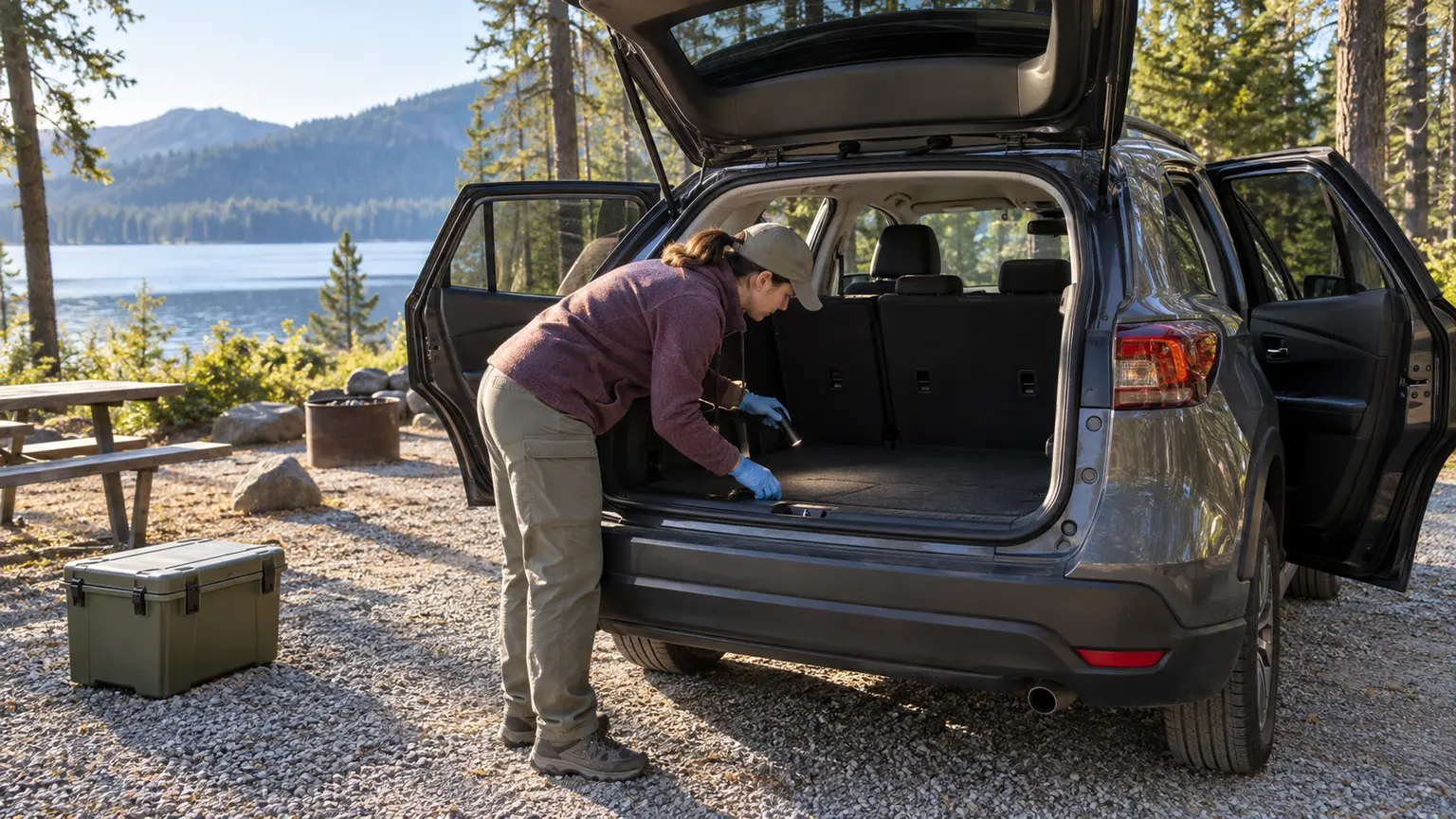
A few dark pellets in the cargo area change the cleanup plan. Do not reach for a vacuum, broom or compressed air. Dry disturbance can send contaminated dust into the air. Start by ventilating the vehicle, then wet and wipe the affected material.
This guide follows current U.S. Centers for Disease Control and Prevention guidance for rodent cleanup. It does not mean every dropping carries disease, and it cannot identify the animal from appearance alone. If the contamination is extensive, hidden in ductwork or mixed with damaged wiring, stop disturbing it and get qualified help.
First, do not clean it dry
The CDC says not to vacuum or sweep rodent urine, droppings or nesting material before disinfection. It also says not to use a high-pressure sprayer on untreated contamination. The reason is practical: dry cleaning can make contaminated particles airborne.
Move the car to a well-ventilated outdoor place if that can be done without disturbing a nest or creating a mechanical risk. The CDC’s vehicle-cleanup instructions say to open the hood, doors and trunk for 20 minutes. Step away while the vehicle airs out rather than sitting inside it.
If the car has been unused for a long time, inspect before starting it. The CDC specifically calls out the passenger compartment, engine compartment, air intakes and filters. A nest near moving parts, wiring or an intake is a reason to pause and involve a qualified mechanic rather than improvising around the engine bay.
Wet, wait and wipe
Wear rubber or plastic gloves. Thoroughly wet the droppings, urine and surrounding area with an appropriate disinfectant, following its label, or use the bleach solution specified in the CDC instructions. Let it sit for five minutes or for the contact time on the disinfectant label, whichever applies. Then wipe up the material with paper towels.
Place the waste in a covered garbage bin and disinfect the surrounding hard surfaces. When the work is finished, wash your gloved hands before removing the gloves, then wash bare hands with soap and water. If a campsite has no sink, the separate car-camping hygiene guide explains how to plan a handwashing station; it does not replace the disinfectant label or CDC cleanup steps.
| Finding | First action | Next step |
|---|---|---|
| Chewed package, no visible waste | Bag and discard compromised food. Inspect nearby recesses. | Remove crumbs and look for likely entry points. |
| Droppings or urine on a hard surface | Ventilate, glove, soak, wait and wipe. | Disinfect nearby surfaces. Do not initially vacuum or sweep. |
| Nest or waste in an intake or filter | Do not blow or vacuum it dry. | Replace a contaminated filter and use a mechanic where needed. |
| Extensive, inaccessible or duct contamination | Stop DIY disturbance. | Seek qualified cleanup or mechanical help. |
In words: discard chewed food and inspect the surrounding storage area. For visible waste on a hard surface, ventilate, wet and wipe it according to CDC and product-label directions. Do not dry-vacuum a contaminated intake or filter; replace the filter and use mechanical help when access or damage is uncertain. Extensive or inaccessible contamination is not the place to learn by dismantling the car.
Check more than the cargo floor
Rodents may enter a passenger area through ducting, rusted openings or cable conduits. After the visible cleanup, inspect under removable cargo trays, around the spare-wheel well, beside food storage and near accessible cabin-air inlets. Use the owner’s manual for filter access. Do not disconnect the battery, dismantle ventilation systems or reach near moving engine parts unless the vehicle instructions and your competence support the work.
If nesting material is in an air intake, the CDC says to remove and discard the contaminated filter and replace it. Wiring damage, contamination deep in a duct, a large nest or an area you cannot reach safely belongs with a qualified mechanic or cleanup professional.
Food packaging with tooth marks or contamination should not return to the cooler. Discard it, clean the storage area, and restock only uncontaminated food. The two-night cooler-packing guide can help rebuild the food plan after the cleanup.
Prevent the next visit without inventing a guarantee
Remove crumbs, trash and compromised food after the trip. Clean beneath bags and boxes rather than only the visible floor. Rigid containers can improve organization and reduce exposed smells, but do not call an ordinary plastic bin “mouse-proof” unless its maker makes that exact claim for the product.
Food-storage rules depend on the campsite. The National Park Service’s general camping guidance recommends airtight storage and a clean camp, but local rules control. Some locations allow specified vehicle storage; others require lockers or animal-resistant containers. Canyonlands, for example, has site-specific animal-resistant food rules that include crumbs, trash and aromatic items.
That is why the bear-country food-storage guide still matters even when the immediate visitor was a mouse: the land manager’s locker, vehicle or container rule overrides a generic organization tip.
Do not rely on dryer sheets, ultrasonic devices or strong scents as proven prevention merely because they appear in anecdotes. Avoid placing poison or traps in an occupied sleeping cabin without authoritative, situation-specific guidance. The useful first steps are less exciting: remove food residue, follow the local storage rule, inspect likely access points and repair actual openings appropriately.
Know when cleanup becomes a health or mechanical question
Do not assume that finding droppings means you were infected. If you become ill after rodent exposure, contact a clinician or local public-health service and describe the exposure. The CDC’s hantavirus prevention brochure provides additional vehicle-cleanup context, but individual medical advice belongs with a healthcare professional.
The same restraint applies to the car. A few disinfected droppings on an accessible hard surface are different from nesting material in an intake, damaged wiring or contamination you cannot reach. When the cleanup crosses into vehicle systems, use the owner’s manual and qualified mechanical help rather than turning a campsite problem into a repair problem.
Sources
- U.S. Centers for Disease Control and Prevention: How to Clean Up After Rodents (accessed October 30, 2026)
- U.S. Centers for Disease Control and Prevention: Hantavirus brochure (accessed October 30, 2026)
- National Park Service: During Your Stay (accessed October 30, 2026)
- National Park Service: Canyonlands backcountry food storage (accessed October 30, 2026)
- National Park Service: Channel Islands hantavirus precautions (accessed October 30, 2026)