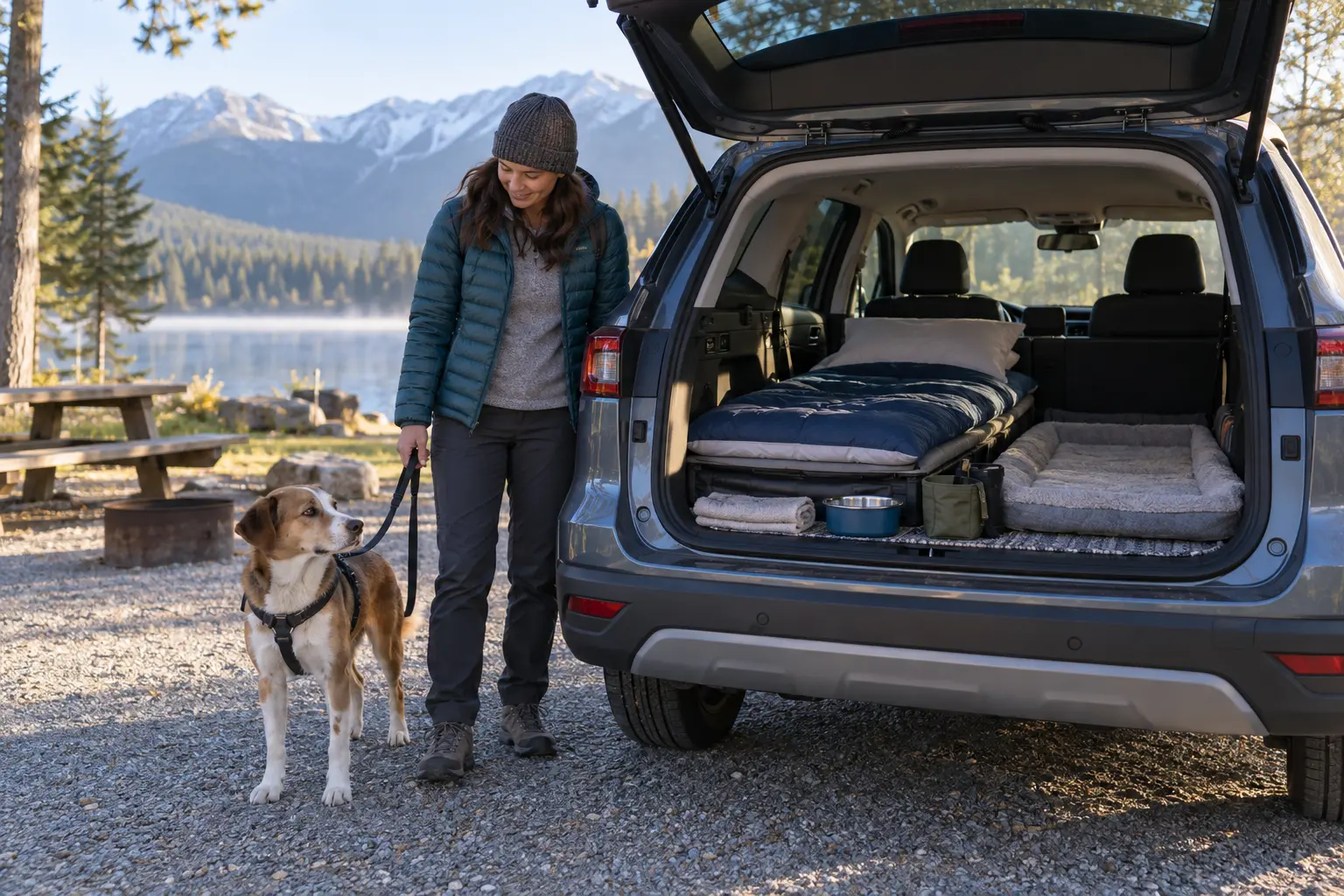
Sharing a car with a dog works best when the dog is part of the floor plan, not squeezed into whatever space remains after the mattress and bags go in. Before the trip, confirm that the destination allows pets, decide whether the journey suits this dog, and test a removable layout with three clear zones: the human bed, a consistent dog bed and an unobstructed exit lane.
The important limits come first. A cracked window, insect screen or fan does not make an unattended warm vehicle safe. Sleeping bedding is not crash protection. And a campsite that allows cars does not automatically allow pets on every trail, beach, shuttle or backcountry route.
First decide whether this trip suits the dog
Start with the animal, the forecast and the itinerary. The American Veterinary Medical Association’s travel guidance recommends considering a pet’s health, temperament and physical condition before travel, and acclimating the animal to car trips and its carrier or restraint before a long journey. Ask a veterinarian about breathing problems, anxiety, motion sickness, medication, heat sensitivity or destination-specific disease risks rather than improvising treatment at camp.
Short-nosed dogs and overweight dogs may face additional heat or breathing risk, and existing health conditions can change whether travel is appropriate. There is no honest universal outdoor temperature that makes every parked-car sleeping setup safe. Sun, humidity, airflow, coat, body size, health and how quickly conditions change all matter.
Then check the destination itself. National Park Service pet-camping guidance advises confirming the campground’s pet rules and the rules for every planned activity. Restrictions can differ between campgrounds, trails, beaches, facilities and backcountry areas. Verify leash requirements, vaccination or paperwork rules, seasonal warnings and whether a pet may ever be left at the site. Our separate guide to checking whether a campsite allows sleeping in your car covers the vehicle question; it does not replace the pet-rule check.
Can this dog share the car tonight?
-
Is the site and activity pet-compatible?
Yes: continue with the destination’s current leash and supervision rules.
No or unclear: change the activity, ask the land manager or choose another site.
-
Does the trip suit this dog and the forecast?
Yes: continue to the layout test.
No or uncertain: use a safer plan and seek veterinary guidance when appropriate.
-
Can the dog have a fixed zone and clear exit?
Yes: rehearse the parked setup at home.
No: reduce gear, change the sleeping arrangement or use a larger legal setup.
-
Can the dog stay supervised and conditions monitored?
Yes: keep checking the dog and the cabin through the night.
No: do not use the car as the sleeping plan.
Measure for the dog before packing the mattress
Set up the car at home exactly as it will be parked at camp. Use our car-sleeping measurement method, then subtract the space needed for a washable dog pad and a narrow access lane. Close the doors and hatch only while an adult remains present and conditions are comfortable; the point is to test reach and movement, not to leave the dog inside.
The dog’s zone should be predictable enough to become part of the bedtime routine. It should not block the primary exit, cover controls, force a person into an unsafe sleeping posture or put a water bowl where it will soak bedding and electronics. A familiar blanket or pad can define the space without becoming a permanent vehicle conversion.
Keep the clear lane genuinely clear. At night, a pile of shoes, food, camera bags or charging cables can turn a workable plan into a tangle. Move loose gear out of the bed before anyone settles. Stage the leash, headlamp, shoes and waste bags where the adult can reach them before opening a door.
Driving mode and sleeping mode are different
During travel, use an appropriate carrier or vehicle restraint and keep the dog away from the driver and the front passenger airbag. The AVMA also recommends regular stops on long drives—about every two hours for dogs to exercise and relieve themselves—and maintaining familiar feeding and relief routines where practical.
Once parked, the sleeping pad and three-zone layout may improve order and comfort, but they are not crash protection. Reconfigure deliberately after arriving and restore the safe driving setup before moving the car. Never drive merely because the dog appears settled on the mattress.
Use a controlled door-opening routine
A sleepy dog can become a loose dog in one careless second. Use one repeatable sequence whenever a door or hatch opens after dark:
- Light: switch on the headlamp and find the leash hardware.
- Leash: attach it to the dog’s properly fitted walking harness or collar before opening.
- Look: check traffic, neighboring campers, wildlife and other dogs.
- Open: use one controlled exit while the other doors remain closed.
This “light, leash, look, open” routine is a practical car-camping workflow, not an official veterinary protocol. It turns escape prevention into a habit instead of a decision made while half awake.
Ventilation is not a heat-safety promise
Window screens can keep insects out, and cross-flow may make a suitable night more comfortable while an awake adult is monitoring conditions. They do not cancel heat risk. AVMA warm-weather guidance says never to leave a pet unattended in a vehicle, even in shade or with the windows cracked. If the car cannot remain suitable for both the people and the dog, change the site, use cooled lodging or end the car-sleeping plan.
Do not use panting as a target condition to manage through. Excessive panting or drooling, anxiousness, restlessness, unsteadiness, abnormal gum or tongue color, collapse or another concerning change means moving to safety and seeking veterinary care; collapse or severe breathing trouble is an emergency. Keep destination emergency-veterinary details available offline.
Pack a small dog kit, not a second household
- Regular food, clean water and stable bowls.
- Leash, properly fitted walking harness or collar, identification and any required records.
- Familiar washable pad or blanket plus a spare towel.
- Waste bags, pet first-aid supplies and prescribed medication.
- Tick-removal tool and veterinarian-approved parasite prevention.
- Offline campground rules and local emergency-veterinary contacts.
CDC pet-travel guidance recommends supervising pets, preventing wildlife encounters, carrying first-aid supplies and checking health and behavior daily. It also warns against letting pets drink or play in stagnant, discolored, scummy or foamy water. Bring enough clean water for the dog instead of treating an unknown pond as a bowl.
Make the last walk and morning check routine
Before bed, take the final relief walk under the site’s leash rules, refill the water bowl, check the sleeping zones and stage the controlled-exit kit. Keep pet food and scented items under the destination’s wildlife-storage rules rather than beside the dog’s bed. The dog’s presence does not create an exception to bear-country food handling.
After brush, grass or trail time, inspect for ticks. CDC tick guidance highlights the ears, eyelids, beneath the collar, under the front legs, between the toes and legs, and around the tail. Remove attached ticks promptly and ask a veterinarian about an appropriate preventive product; products are species-specific and should not be improvised between dogs and cats.
In the morning, check appetite, breathing, movement and behavior before breaking camp. Pick up waste, shake out and inspect the washable pad, and restore driving mode before starting the engine. If the night revealed that the dog could not settle or the exit lane did not stay clear, revise the layout at home rather than repeating the same problem.
The short answer
Give the dog a real place in the plan: confirm the site and trip are appropriate, rehearse a removable three-zone layout, separate vehicle restraint from sleeping bedding, and use a controlled exit routine. Keep the dog supervised, monitor the cabin and the animal, and treat heat or health concerns as reasons to change the plan—not as problems a cracked window can solve.
Sources
- National Park Service: Camping with Pets — destination rules, trip readiness, supplies, leashing, supervision and hot-vehicle warning.
- American Veterinary Medical Association: Traveling with Your Pet FAQ — suitability, acclimation, driving restraint, trip kit and routine.
- American Veterinary Medical Association: Warm Weather Pet Safety — vehicle heat risk and higher-risk animals.
- CDC: Pet Travel Safety — supervision, wildlife and water hazards, first aid and daily checks.
- CDC: Preventing Ticks on Pets — daily inspection areas and veterinarian-guided prevention.
- National Park Service: Camping Safely During Your Stay — restraint, tick checks and closed-vehicle warning.