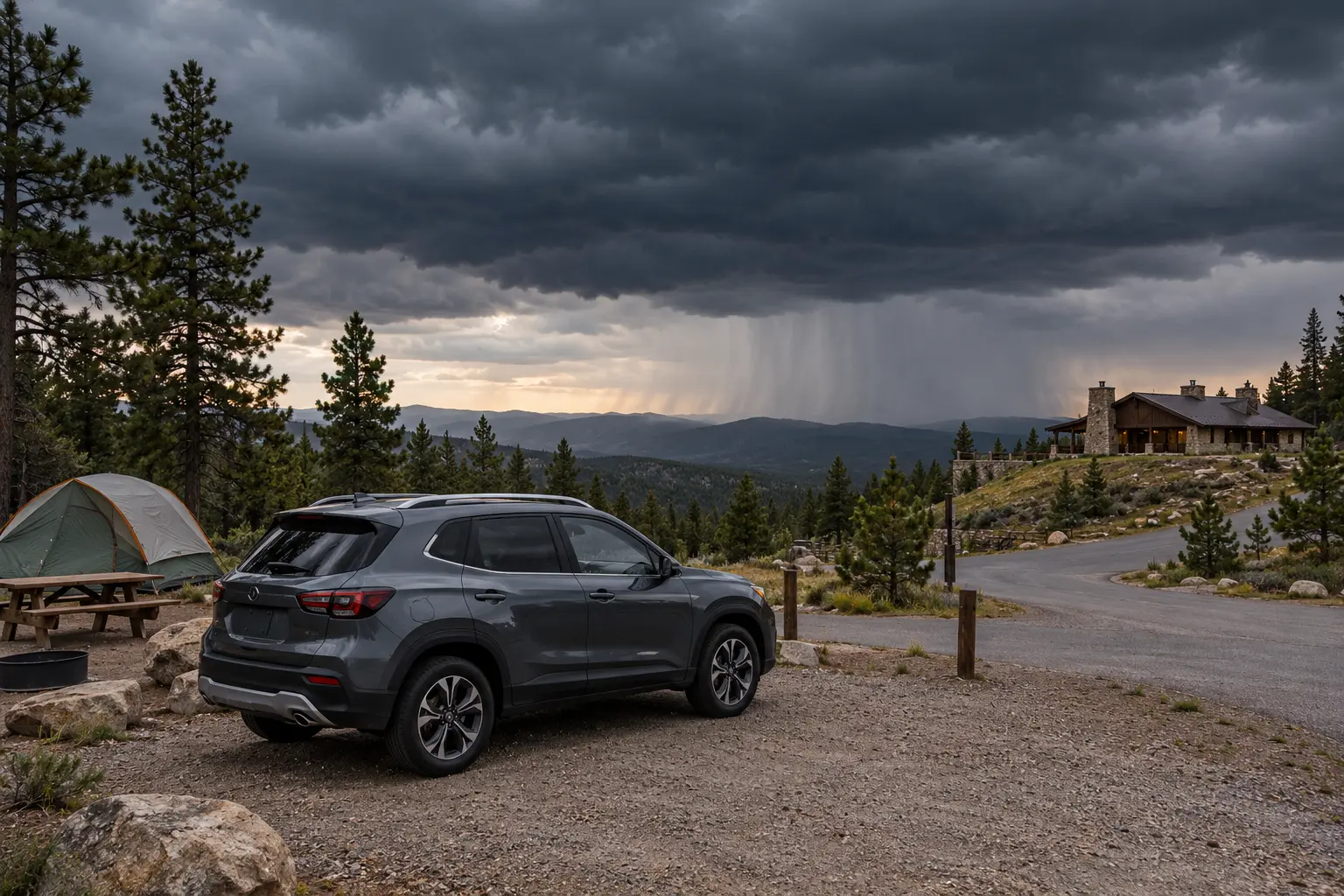
For lightning alone, an enclosed hard-top car with the windows closed is safer than a tent or open picnic shelter. But “get in the car” is not a complete severe-weather plan. Flash flooding, damaging wind, large hail and tornadoes can make a sturdy building—or an early move away from the campsite—the safer choice.
The useful question is not simply, “Is my car safe?” It is, “Which hazard is about to reach this site, and what is my best available shelter from that hazard?” Make that decision while the road is still dry, the keys are easy to find and your sleeping setup is not spread across the vehicle.
Make the storm decision before you make the bed
A forecast that says “thunderstorms possible” should change how you choose and organize camp. Before unloading bedding, check the latest forecast and alerts from the weather authority for your location. In the United States, the National Weather Service distinguishes a severe-thunderstorm watch from a warning: a watch means prepare for possible severe weather, while a warning means severe weather is occurring or imminent and you should act. Outside the US, use your national or local weather service because alert names and procedures differ.
Identify four things before nightfall:
- the nearest substantial building you can legally access;
- a route to higher ground that does not cross a wash, creek or low dip;
- more than one practical way to receive alerts, such as enabled phone alerts where coverage allows and a weather radio where reception is available—no method guarantees delivery everywhere;
- a quick-departure setup with keys, shoes, glasses, medication and a light within reach.
Do not choose a storm-night parking spot beneath damaged or isolated trees, beside a stream, inside a dry wash or at the bottom of a drainage dip. If the site already has poor access or obvious flood exposure, relocating before the storm is usually more useful than planning to ride it out.
Which hazard decides your next move?
Lightning heard or seen
Go to: An enclosed hard-top vehicle with closed windows or a substantial building.
Do not: Remain in a tent, under an open picnic shelter or outside waiting for the rain to start.
Severe wind or large hail warning
Go to: A substantial building if you have time to reach it safely.
Do not: Assume the car is the best shelter simply because it is better than standing outside.
Rising water or flash-flood threat
Go to: Higher ground before roads or exits flood.
Do not: Camp in a wash or drive through water covering a road.
Tornado warning
Go to: The closest sturdy shelter, following current local warnings and official directions.
Do not: Treat a parked vehicle as tornado shelter.
Text equivalent: Use a closed hard-top vehicle or substantial building for lightning; prefer a substantial building for damaging wind or large hail; move to higher ground before flooding blocks the route; and seek sturdy shelter during a tornado warning. A car is not one universal answer to every storm hazard.
If the immediate hazard is lightning
The National Weather Service says tents and open picnic shelters do not protect you from lightning and advises campers to move to a safe vehicle or substantial building. Its vehicle guidance specifies an enclosed, hard-topped metal vehicle with the windows closed. Convertibles, soft-top vehicles and open recreational vehicles are outside that supported advice.
If you can reach a substantial building safely before the storm arrives, use it. Otherwise, get everyone inside the hard-top vehicle, close the doors and windows, and avoid touching metal parts connected to the vehicle’s exterior. The vehicle could still be damaged by a strike, hail, falling limbs or wind-blown debris, so this is shelter from lightning—not a guarantee that the campsite or car is safe from everything around it.
Do not keep opening a door to rearrange wet equipment. Leave outside items outside unless retrieving them can be done well before the storm reaches you. The NWS advises waiting 30 minutes after the last thunder before returning outside.
When wind or hail changes the answer
A closed vehicle is better than being exposed outdoors during severe weather, but the NWS says a secure building is preferable when time permits. Damaging wind can bring down branches and move debris, while large hail can damage a vehicle. Once the storm has arrived, do not expose yourself outside to protect equipment.
If a warning arrives while a suitable building remains safely reachable, move before conditions deteriorate. Do not wait until visibility collapses or debris begins crossing the road. If you cannot relocate safely, keep everyone inside, stay belted when appropriate, avoid unnecessary movement or exposure, and follow live official instructions. Avoid parking beneath trees, utility lines or visibly unstable structures.
Flash flooding means leave low ground early
A hard roof does not solve a bad location. Water can rise around a parked car, cut off the exit or carry debris across the access road. The NWS advises campers not to remain along streams or washes in threatening conditions and repeats the rule: never drive through a flooded road.
If your site is beside a creek, in a canyon drainage, in a low spot or inside a dry wash, move to known higher ground before rain begins upstream. Do not use the car’s clearance as a flood-depth gauge. Water can obscure road damage, deepen quickly and move a vehicle. If a route is covered, turn around and use another route rather than testing it.
A tornado warning overrides the car-shelter plan
A parked car is not tornado shelter. The NWS advises reaching the closest sturdy shelter when possible and following current local warnings. If tornado risk is in the forecast and your campsite has no accessible substantial building, that is a strong reason to choose a different place before setting up for the night.
Do not rely on a single improvised rule for every landscape. Road position, flooding, debris, visibility and nearby shelter all matter. Use the latest official instructions for the exact warning and location rather than trying to solve a tornado decision from a general camping checklist.
Keep the sleeping setup ready to move
A storm-ready car does not need a permanent conversion. It needs a clean exit path. Keep the driver’s seat usable, avoid stacking bins where they block doors, and do not bury the keys under bedding. Put footwear and a headlamp where you can reach them without opening the tailgate.
If rain is also turning the interior into a wet-gear puzzle, use the separate guide to keep wet gear out of your car-camping bed. Comfort matters, but shelter choice and escape access come first.
Before driving out after the storm
Pause before leaving. Look for downed lines, flooded pavement, hanging branches and damaged trees. Check the windshield, lights and tires from a safe position when conditions allow. If water covers the road, do not enter it. If authorities have closed the route or issued an evacuation direction, follow that guidance rather than the original trip plan.
The practical rule is simple: use the car for the hazard it can help with, and leave it for better shelter when the hazard demands something stronger. Lightning, floodwater, damaging wind, hail and tornadoes are different problems. Your plan should be just as specific.
Sources
- National Weather Service: Lightning Safety Outdoors
- National Weather Service: Lightning and Cars
- National Weather Service: Severe Thunderstorm Watch vs. Warning
- National Weather Service: What to Do During Severe Weather
- National Weather Service: Turn Around, Don’t Drown
- National Weather Service: What to Do During a Tornado